KTR Seeks Supreme Court Probe Into ECI's SIR Process
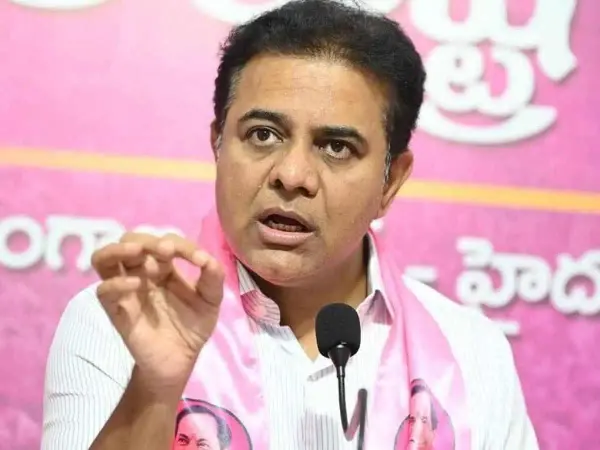
- 1BRS working president K T Rama Rao has urged the Supreme Court to take suo motu cognisance of concerns surrounding the Election Commission’s SIR process.
- 2Two Election Commissioners, Sukhbir Singh Sandhu and Vivek Joshi, reportedly raised 14 formal objections over 10 months on issues linked to voter rolls, Form 6 and election database access.
- 3The Election Commission has maintained that decisions taken by the full Commission, including those related to SIR, were unanimous.

Get Krihaa News App on Your Mobile
Real-time breaking news alerts, political analysis, and movie reviews on Android.
Core News and Key Facts
An internal disagreement within India’s election machinery has now moved into the political spotlight, with BRS working president K T Rama Rao asking the Supreme Court to examine the matter directly. Speaking to the national media on Wednesday, KTR argued that doubts surrounding the Election Commission of India must be addressed because the credibility of the electoral process depends heavily on public confidence.
His remarks came after reports that Election Commissioners Sukhbir Singh Sandhu and Vivek Joshi had raised repeated objections concerning the Special Intensive Revision (SIR) of electoral rolls and related administrative decisions. The Indian Express reported that the two commissioners recorded at least 14 objections over a period of 10 months. The issues reportedly included voter registration, deletion and restoration of names, changes to Form 6 and access to the electoral-roll database.
Context and Official Statements
KTR said the Election Commission is a constitutional body and argued that the Supreme Court is the institution best placed to examine concerns surrounding its functioning. He specifically called for suo motu intervention, saying such a process could establish the facts and help restore confidence.
The reported objections have broader significance because they concern how electoral-roll information is administered. The Indian Express report said the two commissioners questioned what they described as unauthorised changes and raised concerns about gradual centralisation of the electoral database. It also reported that the objections extended to the handling of appeals and software-related issues affecting voter records.
The Election Commission, however, has rejected the impression of a formal split in decision-making. In its response, the poll body said decisions taken by the Commission, including those concerning SIR, were unanimous.
Krihaa Analysis
The important issue for voters is not simply whether two commissioners disagreed internally. The larger question is whether the system provides enough visibility into how disagreements are resolved when electoral-roll decisions can determine whether an eligible citizen remains on the voter list.
That distinction matters because SIR is fundamentally an administrative exercise, but its consequences are political and constitutional: inclusion in the electoral roll is the gateway to exercising the right to vote. Reports of internal objections therefore naturally create a demand for clarity, while the ECI’s response that decisions were unanimous presents a materially different account of how the Commission functioned.
A Supreme Court examination, if the court chooses to consider the matter, would not automatically establish wrongdoing. Its significance would instead lie in testing the process against the constitutional and statutory framework governing the Election Commission. For voters, the practical benchmark is straightforward: can an eligible person understand why their name was flagged, challenge the decision effectively and obtain restoration within time?
That is where the current controversy becomes larger than KTR or the BRS. The credibility of an electoral system ultimately depends not only on the final result, but also on whether ordinary voters believe the route to that result was transparent, reviewable and consistent.
Related Topics
Comments (0)
Join the conversation
Sign in to comment & receive news alerts. Unsubscribe anytime.
Suggested Stories in Politics

Nitin Nabin: BJP Chief Begins West UP Election Review
BJP president Nitin Nabin will visit Meerut and Saharanpur on September 21-22 for organisational meetings, booth-level review and preparations for the 2027 Uttar Pradesh polls.

Telangana CS Sanjay Jaju to Meet Employee Unions Today
Telangana CS Sanjay Jaju will meet employee union representatives today to discuss six pending DAs, PRC progress and unpaid employee and pensioner bills.
B.R. Gavai: Parliament Should Address SC/ST Act Misuse
Former CJI B.R. Gavai said misuse of the SC/ST Act is rare but safeguards may be needed, suggesting Parliament consider tougher penalties for deliberately false complaints.
Published by
Krihaa News — Hyderabad, Telangana
Krihaa News is committed to accurate, independent reporting. Read our editorial guidelines and corrections policy.