Party Switches: 111 MPs, MLAs Changed Sides Since 2022
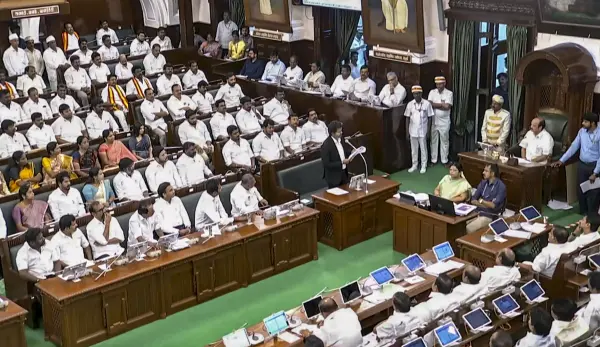
- 1elected representatives changed political parties after winning elections between 2022 and 2026, including 26 Lok Sabha MPs, 7 Rajya Sabha members and 78 MLAs.
- 2Nagaland recorded 32 cases, West Bengal 20 and Telangana 9. In Telangana, all nine lawmakers were originally elected from the BRS, with Congress receiving the defectors.
- 3ADR has called for changes to the anti-defection framework, including clearer timelines and changes to the process for deciding disqualification petitions.


Get Krihaa News App on Your Mobile
Real-time breaking news alerts, political analysis, and movie reviews on Android.
Core News and Key Facts
An election victory is not always the end of a political journey; in many cases, it has become the starting point for another party switch. An analysis by the Association for Democratic Reforms (ADR) and National Election Watch found that 111 sitting MPs and MLAs changed political parties after winning elections between 2022 and 2026. The figure includes 26 Lok Sabha MPs, seven Rajya Sabha members and 78 MLAs. ADR said its classification includes individual defections, party mergers, resignations followed by bypoll victories, and disqualification followed by successful bypoll contests.
The geographical pattern is particularly notable. Nagaland recorded 32 cases, the highest in the country, followed by West Bengal with 20 and Telangana with nine. Goa and Punjab recorded eight cases each, while Maharashtra reported six. The concentration of cases in a few states shows that post-election realignments are often closely linked to local political structures rather than being evenly distributed across the country.
Context and Official Statements
Nagaland's 32 cases were largely connected to the political realignment involving the Nationalist Democratic Progressive Party and the Naga People's Front. ADR found that 25 representatives originally elected from the NDPP were among those who changed parties, while 32 lawmakers joined the NPF. In West Bengal, all 20 cases involved Lok Sabha MPs originally elected on All India Trinamool Congress tickets who subsequently moved to the Nationalist Citizens Party of India. The MPs have claimed a merger, with the matter pending before Lok Sabha Speaker Om Birla.
For Telangana, the number is smaller but politically significant: all nine cases involved MLAs originally elected from the Bharat Rashtra Samithi, while the Congress emerged as the principal recipient. At the national level, NPF received 32 lawmakers, BJP 29 and NCPI 20, meaning these three parties together accounted for 81 of the 111 destination changes. ADR has also stressed that its database may not be exhaustive because no systematically maintained official database exists.
Krihaa Analysis
The most important part of this data is not simply the number 111, but the gap it highlights between an election result and the political composition that exists later in the same term. Voters cast their ballots for candidates under particular party labels, but the legislative arithmetic can subsequently change without another general election.
For Telangana readers, the nine BRS-to-Congress cases are especially relevant because they illustrate how defections can alter the strength of parties inside an Assembly after voters have already delivered their verdict. This makes the anti-defection framework more than a constitutional technicality: it directly affects how closely the composition of a legislature continues to resemble the result produced at the ballot box.
ADR has renewed calls for changes to the existing framework, including timelines for deciding disqualification petitions and a different mechanism for handling such cases. The broader debate, therefore, is not only about individual lawmakers changing parties. It is about whether India's institutional rules can provide a predictable process when political loyalties change after an election.
Related Topics
Comments (0)
Join the conversation
Sign in to comment & receive news alerts. Unsubscribe anytime.
Suggested Stories in General
KTR to Watch Nani’s The Paradise in Theatre Tonight
BRS working president KTR says he will watch Nani’s The Paradise in a theatre tonight, marking his return to the big screen after several years.
Vinod Kambli Shares Emotional Update From Thane Care Centre
Vinod Kambli has shared an emotional update from a Thane elderly care centre, praising its care and facilities while fans continue to express concern about his well-being.

TG TET In-Service Teachers 2026 Results Released Today
TG TET In-Service Teachers 2026 results are out, with 15,749 candidates qualifying and an overall pass percentage of 70.07% in the September CBT exams.
Published by
Krihaa News — Hyderabad, Telangana
Krihaa News is committed to accurate, independent reporting. Read our editorial guidelines and corrections policy.