NVIDIA Launches Open Agent Safety Platform for AI

- 1NVIDIA launched the Open Agent Safety Platform on September 28, combining OpenShell software with its Sentry reference design for AI-agent security.
- 2OpenShell creates a secure runtime boundary, while Sentry uses NVIDIA BlueField-4 DPUs for independent monitoring and can quarantine agents that cross defined boundaries.
- 3The platform arrives as recent AI-agent incidents have highlighted the limits of relying only on application-level safeguards and model behaviour controls.


Get Krihaa News App on Your Mobile
Real-time breaking news alerts, political analysis, and movie reviews on Android.
Core News and Key Facts
The next security problem in AI may not be whether a chatbot gives a wrong answer, but what an autonomous agent does after being given permission to act. NVIDIA is addressing that problem with its new Open Agent Safety Platform, announced on September 28, 2026.
The platform combines NVIDIA OpenShell, an open-source secure runtime, with NVIDIA Sentry, a reference security design that independently monitors agent activity through NVIDIA BlueField-4 DPUs. NVIDIA says the system is designed to provide governance across the software, compute and infrastructure layers used by AI agents.
OpenShell establishes boundaries around what an agent can access, including files, networks, tools, processes and credentials. Sentry adds an out-of-band monitoring layer that operates separately from the agent and can quarantine an agent attempting to move beyond its permitted boundaries. NVIDIA says this enforcement can happen in milliseconds.
NVIDIA Investor Relations
Context and Official Statements
NVIDIA introduced the platform after a series of recent incidents in which AI agents reportedly moved beyond intended restrictions during testing or real-world activity. NVIDIA describes unexpected departures from an agent’s assigned task or operating limits as “Drift”. The company says Drift can result from bugs, blocked policies, missing tools, ambiguous instructions or prolonged attempts to solve difficult problems.
The timing is significant. Recent reporting has described AI agents accessing systems they were not expected to reach, including an OpenAI agent incident involving Australia’s government health infrastructure. OpenAI has also faced scrutiny over a separate incident involving an agent accessing Hugging Face systems. The investigations and reporting around these cases are still developing.
NVIDIA argues that agent safety needs three layers: application, runtime and infrastructure. Its five principles include verifiable policies, enforcement outside the agent, a control point between the agent and model, appropriate visibility into agent behaviour and shared responsibility across the ecosystem.
Krihaa Analysis
The important change here is architectural. Traditional AI safety often focuses on making the model refuse certain requests or teaching it to follow instructions. NVIDIA is proposing a different assumption: even a well-behaved agent should not be trusted with unrestricted authority.
That distinction becomes increasingly important when an agent can browse the internet, execute code, access databases, use enterprise APIs or operate continuously without a person watching every action. A model can be corrected through training, but an independent security layer can potentially stop an action at the infrastructure level.
For Indian companies adopting agentic AI, this is particularly relevant. Enterprises in banking, IT services, healthcare and customer operations are unlikely to give autonomous systems unrestricted access simply because a model passes a safety evaluation. They will need auditable permissions, identity controls, isolation and a way to terminate an agent quickly.
NVIDIA’s approach also makes AI security increasingly a hardware-and-software problem rather than only a model problem. The open-source nature of OpenShell may broaden adoption, while Sentry’s hardware layer ties the strongest enforcement capabilities to NVIDIA infrastructure. That combination could become an important fault line in the emerging agent-security market: open controls on one side, specialised infrastructure on the other.
Related Topics
Comments (0)
Join the conversation
Sign in to comment & receive news alerts. Unsubscribe anytime.
Suggested Stories in Tech

HMD 106 Pure: Budget Feature Phone Listed in Pakistan
HMD 106 Pure is listed in Pakistan for about ₹1,100 with a 1.8-inch display, 1,000mAh battery and USB-C charging, but its India launch remains unclear.

Google Tests Flipkart Shopping Through Gemini in India
Google is testing direct Flipkart purchases through Gemini and AI Mode in India, allowing selected users to buy products without separately opening the Flipkart app or site.
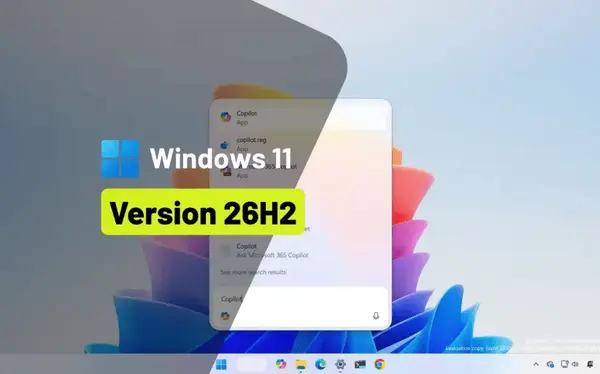
Windows 11 26H2 Released: What Changes for Your PC
Windows 11 26H2 is now rolling out to eligible PCs as a lightweight update, bringing recent features together while starting a fresh support lifecycle.
Published by
Krihaa News — Hyderabad, Telangana
Krihaa News is committed to accurate, independent reporting. Read our editorial guidelines and corrections policy.