Hyderabad Traffic: JNTU-Raidurg Corridor Gets Road Study
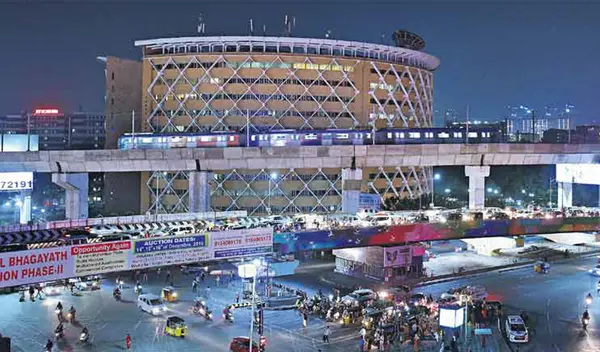
- 1Officials will conduct a comprehensive study of the 8.5-km JNTU-Miyapur-Raidurg corridor to identify major traffic bottlenecks.
- 2The Raidurg Metro area has emerged as a key pressure point because road width narrows sharply while vehicle movement remains heavy.
- 3The proposed solutions include continuous footpaths, dedicated pickup and drop-off bays, regulated auto stands and school zones away from the main carriageway.


Get Krihaa News App on Your Mobile
Real-time breaking news alerts, political analysis, and movie reviews on Android.
Core News and Key Facts
For commuters crossing west Hyderabad each day, the biggest problem may not be the length of the journey but the sudden points where an otherwise functional road system breaks down. Officials have now decided to undertake a comprehensive study of the 8.5-km JNTU–Miyapur–Raidurg corridor to identify these recurring pressure points and examine measures to improve traffic flow.
The corridor connects some of Hyderabad’s busiest residential, commercial and employment zones. The Raidurg Metro Station surroundings have been identified as a particularly difficult stretch, where a sudden reduction in road width combines with heavy vehicle movement to create recurring congestion. Cyberabad Municipal Corporation, TGSRTC and Cyberabad Traffic Police are expected to work together on identifying key “break points” along the route.
Context and Official Statements
The proposed assessment will look beyond the traffic volume itself. Missing pedestrian links, illegal encroachments, pedestrian crossings and congestion around school zones will form part of the study. This matters because several of these factors can slow an entire carriageway even when the road technically has sufficient capacity.
Among the measures being considered are continuous pedestrian footpaths, dedicated pickup and drop-off bays, regulated auto-rickshaw stands and school drop-off areas positioned away from the main carriageway. The objective is to separate pedestrian and local-access activity from through traffic wherever possible.
The involvement of both public transport and traffic authorities is significant because congestion on this corridor is not caused by a single category of road user. Buses, private vehicles, autos, pedestrians and school traffic all compete for limited road space.
Krihaa Analysis
The interesting part of this exercise is that Hyderabad may be moving from a “build more road” approach toward a “fix how existing road space is used” approach. That distinction could matter more than widening a few stretches.
A missing footpath, an unregulated auto stop or a school vehicle stopping directly beside the main carriageway can create a small obstruction that quickly becomes a larger traffic queue. In a dense urban corridor, fixing these micro-level disruptions can sometimes improve movement without major construction.
The Raidurg stretch also illustrates a broader challenge for western Hyderabad: metro expansion and rapid commercial development have increased mobility options, but the last-mile road environment has not always evolved at the same pace. If the study results in coordinated pedestrian, public transport and traffic-management changes rather than isolated road works, it could provide a model for addressing similar bottlenecks across the city.
Related Topics
Comments (0)
Join the conversation
Sign in to comment & receive news alerts. Unsubscribe anytime.
Suggested Stories in General

Groww Starts US Stock Investing Rollout for Indian Users
Groww has begun rolling out US stock investing in India, offering access to over 10,000 US stocks and ETFs as demand for AI and global tech exposure rises.
Nani Visits Medaram Temple Ahead of The Paradise Release
Nani visited Medaram temple ahead of The Paradise release, adding a Telangana cultural touch to promotions for his Srikanth Odela film and its regional identity.

T-122 Tiger Captured After Three Fatal Attacks
Maharashtra forest officials have captured tiger T-122 after three human deaths and one serious injury in the Saoli forest range triggered months of fear.
Published by
Krihaa News — Hyderabad, Telangana
Krihaa News is committed to accurate, independent reporting. Read our editorial guidelines and corrections policy.



