Epsom Salt for Plants: Benefits and Safe Garden Use
- 1Epsom salt supplies magnesium and sulfur, nutrients that can help plants when a genuine magnesium deficiency is present.
- 2Magnesium plays an important role in chlorophyll production, while excess magnesium can interfere with calcium and potassium availability in soil.
- 3Blossom end rot in tomatoes should not be treated simply with Epsom salt; the disorder is linked to calcium movement and inconsistent soil moisture, not a lack of magnesium.
Core News and Key Facts
A small packet of Epsom salt sitting in a gardening shelf can look like an all-purpose solution for yellow leaves, weak flowering and poor fruiting. But the real value of Epsom salt for plants is more specific: it is primarily a source of magnesium and sulfur, and it works best when a plant actually needs those nutrients.
Magnesium is an essential component involved in chlorophyll production, so a deficiency can show up as yellowing between the veins of older leaves. Extension guidance notes that magnesium deficiency can occur even when magnesium exists in the soil, because other nutrients such as calcium or potassium can affect its availability.
For home gardeners growing roses, jasmine, hibiscus, vegetables or fruit plants, Epsom salt should therefore be treated as a targeted nutrient supplement rather than a routine plant booster. A soil test or clear deficiency symptoms are more useful than automatically adding it every month.
Context and Safe Garden Use
Epsom salt is magnesium sulfate. One extension guide lists it at roughly 10% magnesium, although the exact composition can vary by product. In some situations, diluted foliar applications can provide magnesium quickly, and extension recommendations do use Epsom salt for correcting magnesium deficiency in specific crops.
However, several popular gardening claims need caution. Epsom salt is not a complete fertilizer and does not replace nitrogen, phosphorus or potassium. More importantly, tomato blossom end rot is associated with calcium deficiency or poor calcium movement and is strongly affected by fluctuations in soil moisture. Adding Epsom salt is not a direct cure for it.
Overapplication is another concern. Excess magnesium can interfere with calcium uptake, while repeated nutrient applications can increase soluble salts in soil when drainage and leaching are inadequate.
Krihaa Analysis
The biggest gardening lesson here is that Epsom salt should not be judged by the number of leaves that turn greener after application. The more important question is why the plant was struggling in the first place.
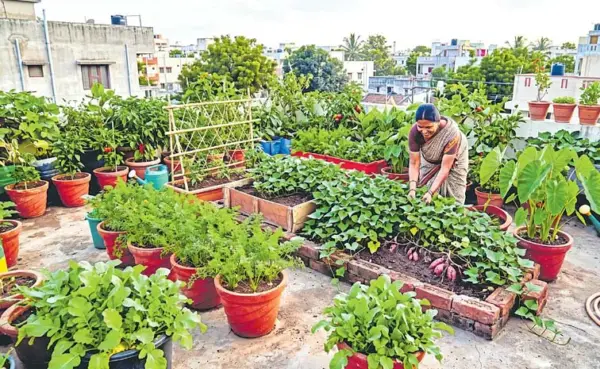
For a terrace gardener, this changes the approach completely. Yellow leaves, poor flowering or weak growth can result from several causes, including water stress, unsuitable soil pH, root problems and deficiencies of nutrients other than magnesium. Treating every symptom with Epsom salt can hide the original problem and gradually disturb the nutrient balance.
That makes diagnosis more valuable than dosage. If older leaves show characteristic interveinal yellowing and magnesium deficiency is confirmed, Epsom salt can have a legitimate role. If the plant is healthy, adding it simply because it is popular online may offer little benefit.
The practical takeaway is simple: use Epsom salt as a corrective nutrient, not as a monthly miracle treatment. Good drainage, balanced fertilisation, appropriate watering and healthy soil remain the foundation of a productive terrace garden.
Related Topics
Comments (0)
Join the conversation
Sign in to post comments, like, and reply
Suggested Stories in General

PM Modi Unveils Saptadhara Plan to Build Viksit Bharat
PM Modi unveiled the seven-point Saptadhara framework for Viksit Bharat by 2047, focusing on manufacturing, agriculture, technology, infrastructure, defence, green growth and soft power.

Hyderabad Gang Cheats 11 People of Rs 1 Crore in ‘Hidden Treasure’ Scam
A Hyderabad-based gang allegedly cheated 11 people of nearly Rs 1 crore by promising to find hidden treasure beneath their homes. Police said the accused dug pits, planted coal and fake gold-coated coins, and claimed the coal would eventually turn into gold.

7.4-Magnitude Quake Devastates Western Colombia
A powerful 7.4-magnitude earthquake struck western Colombia, killing at least 132 people and injuring around 570. More than 1,500 homes, 18 health centres and 52 schools were damaged, while rescue teams continued searching collapsed buildings for survivors.
Published by
Krihaa News — Hyderabad, Telangana
Krihaa News is committed to accurate, independent reporting. Read our editorial guidelines and corrections policy.